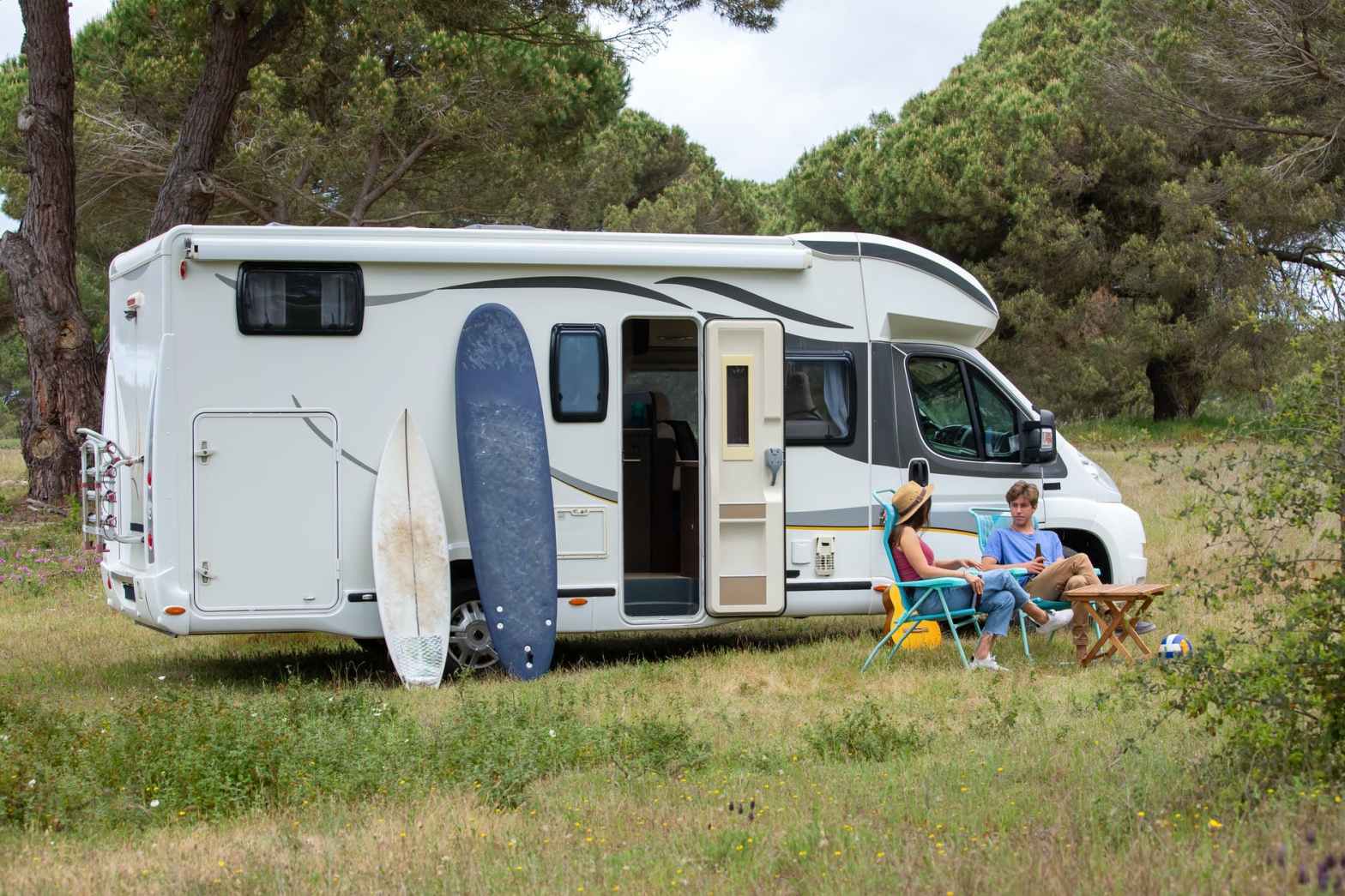
Living in a motorhome can be an attractive option for those seeking a more flexible lifestyle or looking to save money on rent or mortgage payments. However, the question many people in the UK ask is whether it is legal to live in a motorhome. This article explores the legality of living in a motorhome and the regulations you need to be aware of if you’re considering this lifestyle.

Living in a motorhome is not illegal in the UK. However, there are planning and vehicle laws you need to consider if you plan to make a motorhome your permanent residence. Planning laws regulate the use of land and buildings in the UK. If you plan to park your motorhome on your own or rented land, you must have the necessary planning permission to use it as a permanent residence. Failure to do so may result in legal action and an order to move your motorhome.
Parking on owned land
The rules regarding planning permission for motorhomes vary depending on where you are in the UK. In England, for example, you may live in a motorhome on your land for up to 28 days without planning permission. However, if you plan to live in your motorhome for longer than 28 days, you must apply for planning permission from your local council. A bit of a loophole means that if you plan to use your motorhome primarily in connection with your owned house and do not intend to use it as a separate dwelling, you may not require planning permission.
In Scotland, the rules are different, and you may require planning permission regardless of how long you plan to live in your motorhome.
If you plan to park your motorhome on someone else’s land, such as a campsite or caravan park, ensure that the site has the necessary planning permission for residential use.
Vehicle laws regulate the use and safety of vehicles on UK roads. If you plan to use your motorhome as a permanent residence, you must ensure that it is roadworthy and meets all necessary safety standards. This includes having a valid MOT, tax, and insurance.
Parking at the roadside.
If you plan to park your motorhome on the roadside, follow the same parking regulations as other vehicles. Generally speaking, you cannot park your motorhome in a residential area for more than 72 hours, and you cannot park it in restricted areas such as double yellow lines or bus stops. Local councils tend to sometimes enforce a 72-hour limit on parking in residential areas, including for motorhomes, to ensure fair use of public spaces and to provide access to residents and emergency services.
Rightly or wrongly, legislation concerning abandoned vehicles is often used in the UK, which is set out in the Refuse Disposal (Amenity) Act 1978, this gives local authorities the power to remove and dispose of abandoned vehicles. Under this Act, a vehicle is considered abandoned if it:
- Has no keeper on the DVLA database.
- Is stationary for a significant period of time (this is an area a number of vanlife owners have had to deal with).
- Is in a poor condition, for example, it is damaged or unroadworthy
- Has no tax, insurance or MOT.
- Has evidence of vandalism or criminal activity.
- Has been left in a hazardous location, such as blocking a fire exit or obstructing a road.

Insurance
Insurance companies typically require a permanent address to provide cover. Without a permanent address, it can be difficult to obtain insurance cover for a motorhome. Some insurance companies may require proof of residency, such as a lease agreement or utility bills, to verify the address of the insured.
For those living in a motorhome full time, it may be necessary to establish a mailing address with a mail forwarding service or a friend or family member’s address to receive mail and provide a location for insurance purposes. However, this may not be sufficient for some insurance companies, as they may require a physical address where the motorhome is parked most of the time.
In addition to the address issue, living in a motorhome full time can also present unique insurance challenges. For example, insurance companies may consider the motorhome a high-risk vehicle due to being both a home and a mode of transportation.
Furthermore, full-time motorhome living may also require specialised insurance coverage that goes beyond standard vehicle insurance. For example, liability coverage for personal injury or property damage caused by the motorhome may be necessary, as well as coverage for personal belongings inside the motorhome.
In summary
Living in a motorhome is legal in the UK, but you must follow regulations. Ensure that you have the necessary planning permission and that your motorhome meets all necessary safety and vehicle standards. You must also ensure you have the correct insurance and the underwriter id properly aware of how the vehicle is being used, particularly if you have no bricks and mortar address at which you can call home. By doing so, you can enjoy the freedom and flexibility of motorhome living while remaining on the right side of the law.
 Vintage RV Adventures