Owning a caravan offers the freedom to explore and travel at your own pace. However, like any other home on wheels, caravans are prone to damp issues, which can lead to serious damage if not addressed promptly. This blog post will guide you through identifying signs of dampness in your caravan, understanding its consequences, and how to dry it out effectively.

How to Check if a Caravan Has Damp
Dampness is a common problem in caravans, primarily due to their compact spaces and exposure to the elements. Here’s how you can check for damp:
- Visual Inspection: Start by examining the interior of your caravan. Look closely at the walls, ceiling, and floor. Common areas where dampness occurs include window sills, corners, and near the door. Watch for discoloration, stains, or patches that look darker than the surrounding area.
- Use a Damp Meter: A more precise method is to use a damp meter. These devices measure the moisture content in the walls and floors of your caravan. Insert the probes into suspicious areas, and the meter will give a reading. A moisture content above 20% indicates dampness and should be addressed immediately. Here is an example of a Caravan Damp Meter from Amazon: https://amzn.to/4cAJ7Ex
- Smell Test: Dampness often has a distinctive musty odor. When you first enter the caravan, take a moment to breathe in and see if you detect any unusual smells. A musty or moldy scent is a clear indication of damp.
- Check for Soft Spots: Walk around the caravan and press on the walls and floor. If you find any areas that feel soft, spongy, or give way slightly under pressure, this could be a sign of damp damage. Soft spots usually indicate that the structural material has absorbed moisture and may be decaying.
- Inspect Seals and Joints: Check the seals around windows, doors, and roof vents. If these seals are cracked, worn, or damaged, water can easily enter the caravan, leading to dampness. Make sure all seals are intact and replace any that show signs of wear.
What Does Damp Look Like in a Caravan?

Dampness in a caravan can manifest in various ways:
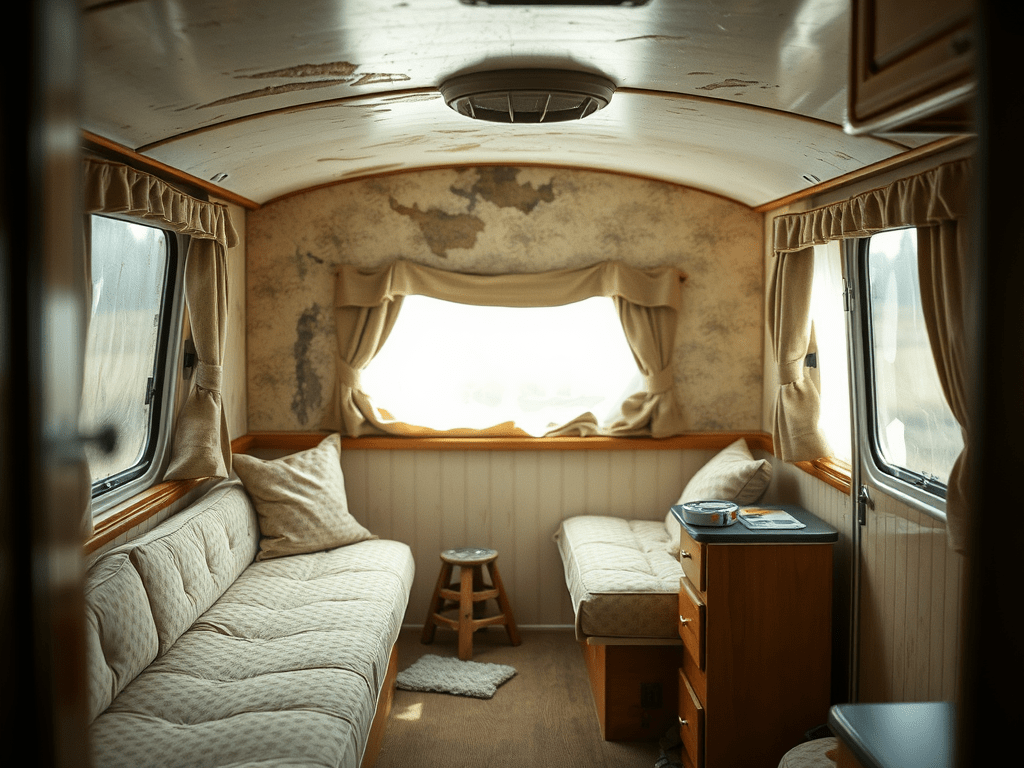
- Discoloration: Dark or discolored patches on walls, ceilings, or floors are common signs. These patches may look like water stains and can vary in size.
- Mold and Mildew: If the damp problem has been present for some time, mold and mildew can develop. These appear as black, green, or white spots on surfaces.
- Peeling Wallpaper or Paint: When moisture gets trapped behind wallpaper or paint, it can cause them to peel, bubble, or blister.
- Condensation: Persistent condensation on windows, walls, or other surfaces can indicate high moisture levels, which may lead to damp issues.
What Happens if a Caravan Gets Damp?

If left untreated, dampness can lead to several problems:
- Structural Damage: Moisture can weaken the structure of your caravan. Wood rot, for example, can compromise the integrity of walls, floors, and even the chassis.
- Health Risks: Damp environments are ideal breeding grounds for mold and mildew, which can cause respiratory issues and allergies for those living in or using the caravan.
- Unpleasant Odors: A damp caravan often smells musty, which can be unpleasant and hard to remove once it takes hold.
- Decreased Resale Value: A caravan with damp issues is less appealing to buyers. It can significantly reduce its resale value and make it harder to sell.
How to Dry Out a Damp Caravan
If you’ve identified dampness in your caravan, it’s crucial to act quickly to prevent further damage. Here’s how you can dry out a damp caravan:
- Improve Ventilation: Open all windows and doors to allow air to circulate freely. Use fans to increase airflow and speed up the drying process.
- Use a Dehumidifier: Place a dehumidifier inside the caravan to extract moisture from the air. This is especially effective in enclosed spaces where natural ventilation is limited.
- Use a Damp Absorber: Here is an example on Amazon: https://amzn.to/472IW3v
- Remove Damp Materials: Any materials that are heavily affected by damp, such as carpets, cushions, or curtains, should be removed and dried separately. In some cases, replacing these items may be necessary.
- Heat the Space: Use portable heaters to warm up the caravan. Heat helps evaporate moisture, especially in colder, damp conditions.
- Fix Leaks and Improve Seals: Ensure all potential entry points for water are sealed. Repair any leaks and replace worn-out seals around windows, doors, and vents.
- Regular Maintenance: Regularly inspect your caravan for signs of damp and maintain seals and joints to prevent future problems.
Take proactive steps to check for damp issues. Fix these issues promptly. By doing so, you can make certain that your caravan remains a comfortable and safe space for your adventures. Regular inspections and maintenance will help you catch any problems early, saving you time, money, and stress in the long run. Happy caravanning!
 Vintage RV Adventures