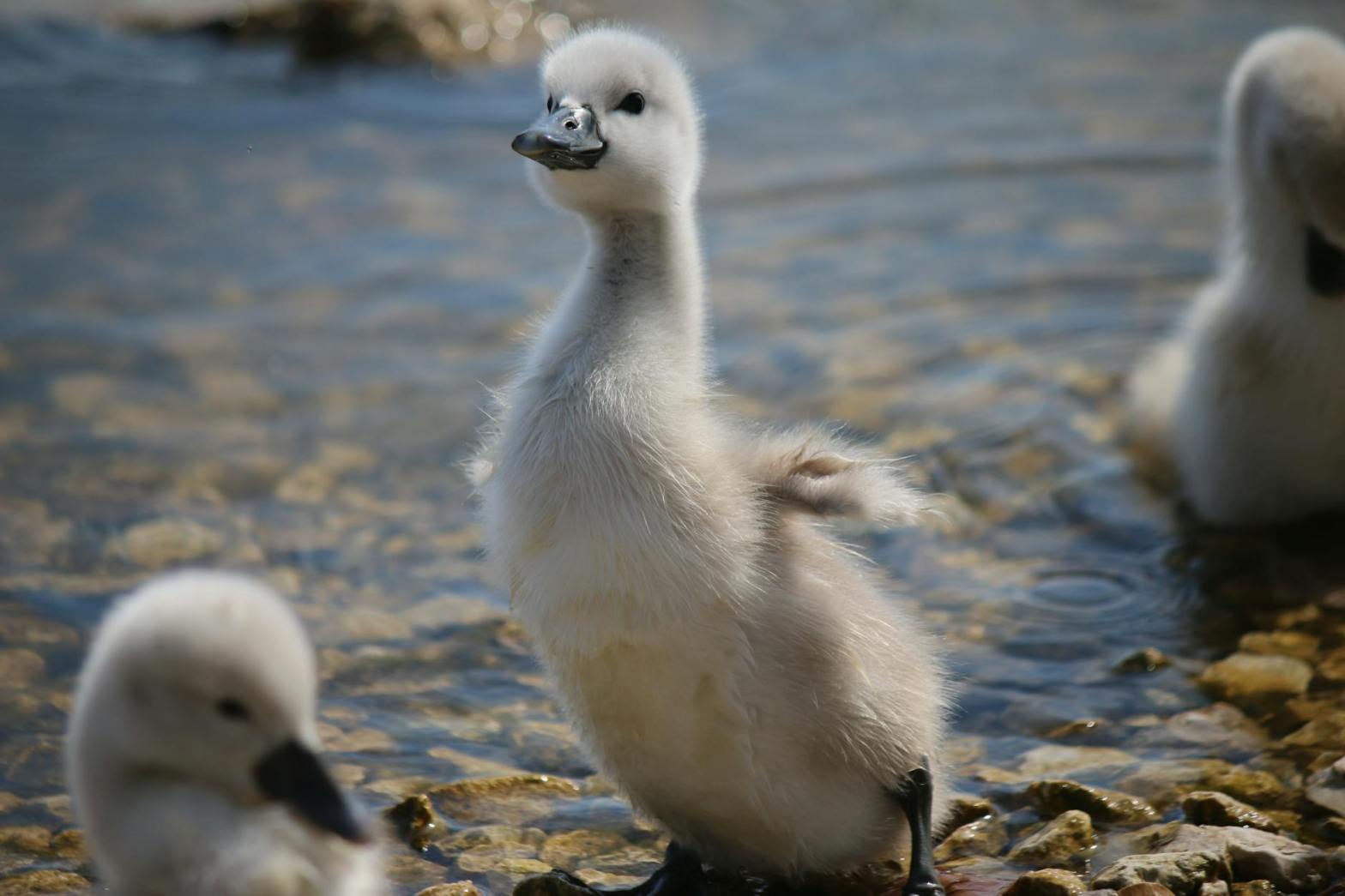
This is a myth! There is very little risk the parents will abandon the chicks.
In reality, swans, ducks, and most birds have a limited sense of smell, so they don’t reject their young if a human has touched them. Birds primarily recognize their offspring by sight and sound rather than scent. However, handling young birds should be minimised, as it can cause them stress and potentially alert predators.
If you ever come across a young swan, duck, or any other wild bird, it’s best to leave it alone unless it’s in immediate danger or clearly abandoned, as its parents are usually nearby.

Birds’ senses are uniquely adapted to their lifestyles, but they differ quite a bit from mammals, especially in their reliance on certain senses over others.
Sight
For most birds, sight is the primary sense. Many species have excellent vision, which helps them locate food, avoid predators, and recognise their young. Birds like hawks have some of the sharpest vision in the animal kingdom, while others rely on a strong sense of colour and movement. Parent birds use visual cues to recognise their young based on subtle differences in appearance, such as plumage patterns, and even location within the nest.
Sound
Sound is another key way that birds recognise their young. Bird species that form large colonies, like seagulls, use distinct vocalisations to identify family members in a crowded environment. Chicks often develop unique calls, which their parents can recognise even amidst the noisy sounds of a colony. This sense is so strong that, even if a chick or fledgling wanders a bit from its parents, its distinctive call helps the parent find it.
Smell
While some animals, like mammals, rely heavily on smell to navigate and identify one another, most birds have a very limited sense of smell. Songbirds, for example, have few olfactory receptors, which means they aren’t sensitive to human or other foreign scents. This lack of olfactory capability is why touching a bird doesn’t cause the parents to abandon it. They simply don’t rely on scent as a cue for recognising their young.
There are exceptions: certain birds such as petrels and shearwaters, do have a more developed sense of smell. These species often use scent to locate food rather than to identify family members. Vultures, for instance, are known for their ability to smell carrion from far away. However, even these birds do not rely on scent when it comes to caring for their young, meaning that human scent on their chicks doesn’t cause abandonment.
Behavior-Based Recognition
Some birds also recognise their offspring by behavioral cues, observing the chick’s begging behavior, posture, or feeding routines. For example, parent birds might respond to a specific way their chick stretches out its neck or opens its beak during feeding.
In sum, birds primarily rely on sight and sound for recognition, with scent playing a minimal role. So, if a human happens to touch a chick, it doesn’t leave an odor that would cause the parent bird to reject it. This knowledge helps debunk the common myth and encourages people to better understand and respect wildlife.
 Vintage RV Adventures