
Today’s developments (2nd April 2025) in U.S.A trade policy are sending huge ripples across the global economy and the UK’s leisure vehicle industry is no exception.
With the U.S. government implementing a 10% tariff on UK exports and a 25% levy on foreign-made automobiles, questions are being raised about how these changes could affect one of Britain’s most beloved lifestyle sectors: caravans and motorhomes.
While the automotive industry has been the main focus of concern, the leisure vehicle market caravans, campervans, and motorhomes is also poised for significant disruption.
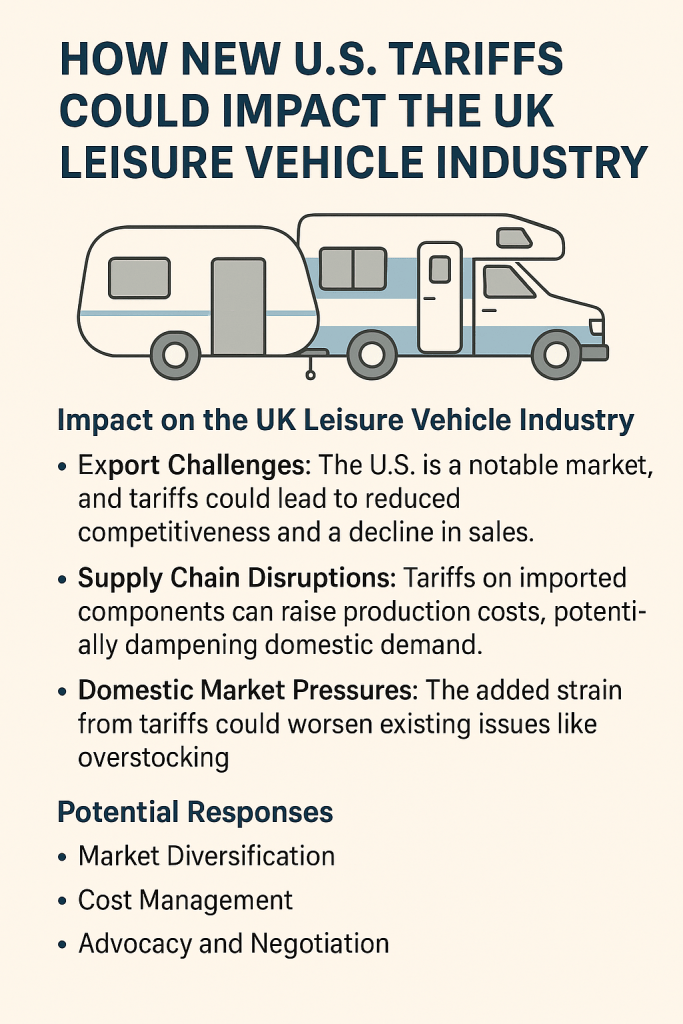
Export Challenges: A Threat to Global Reach
The United States represents a key export market for UK-manufactured leisure vehicles. British motorhomes and caravans have found growing popularity among U.S. consumers drawn to their build quality, design, and unique features.
However, with the newly imposed tariffs, UK products are set to become more expensive in the U.S. market, threatening their competitive edge. Higher costs could lead to a decline in demand from American buyers, echoing concerns raised by the RV Industry Association when faced with similar trade barriers impacting U.S. exports.
This scenario may force UK manufacturers to reassess their international strategies and reduce their reliance on the U.S. market.
Supply Chain Disruptions: Rising Costs and Delays
Beyond exports, the tariffs may also disrupt the supply chain for UK leisure vehicle production. Many components used in the construction of caravans and motorhomes—such as electronics, chassis parts, and interior fittings—are imported. With tariffs increasing the cost of these inputs, manufacturers could face higher production expenses.
This may result in price hikes for consumers, potentially softening domestic demand. For an industry that already faced supply chain pressure during the pandemic and Brexit transitions, this is another layer of complication.
Domestic Market Pressures: A Perfect Storm?
The UK leisure vehicle industry has already been navigating a challenging post-pandemic landscape. Issues such as overstocking, shifting consumer trends, and economic uncertainty have impacted both manufacturers and dealerships.
The introduction of tariffs adds a new strain, possibly exacerbating existing inventory issues and weakening market confidence. For smaller businesses especially, this could prove to be a pivotal moment.
How the Industry Might Respond
Despite these challenges, the UK leisure vehicle sector is known for its resilience and adaptability. Several strategic responses are already being discussed:
- Market Diversification: Manufacturers are likely to explore new international markets less affected by U.S. tariffs, such as regions in Asia, the Middle East, and Oceania, to reduce dependence on American buyers.
- Cost Management: Many companies are expected to optimize operations and reevaluate sourcing strategies, perhaps turning to domestic or European suppliers to reduce reliance on tariffed imports.
- Advocacy and Negotiation: Industry bodies such as the National Caravan Council (NCC) may lobby the UK government for targeted support or exemptions, and encourage trade discussions with U.S. officials to ease restrictions on leisure vehicle exports.
A Shifting Road Ahead
While the full impact of the new U.S. tariffs is yet to unfold, the UK leisure vehicle industry is bracing for change. From export losses and supply chain headaches to renewed focus on innovation and diversification, the road ahead will require strategic thinking and collaborative effort.
As the global trade landscape continues to evolve, stakeholders in the caravan and motorhome sector must stay agile—and be prepared to shift gears.
 Vintage RV Adventures